


Cricket Practice Ball Weights Explained: How to Choose 90g, 110g, 120g or 130g

Updated: Oct 14
A cricket practice ball’s printed weight is useful, but it does not tell you how the ball will feel, bounce or suit a player. Compare weight alongside construction, firmness, bat, surface and the job of the drill. A 90g or 120g training ball is not automatically a substitute for a regulation adult match ball.

At a glance
Start with the drill and player. Use the listed weight to narrow the choice, then check the ball’s feel in a controlled setting. Keep lighter or softer practice models distinct from match equipment in your kit.
What does the number on a cricket practice ball mean?
It is the ball’s listed mass. ADRIN’s catalogue, for example, includes a 90g wind ball, soft high-bounce practice models at 110g, 120g and 130g, and a 120g synthetic ball. These are product specifications, not independent performance rankings or safety certifications.
For context, MCC Law 4 specifies 155.9–163g for a new adult men’s cricket match ball. That comparison helps explain why a 120g training ball should not be described as the same ball used in an adult match. Check the playing rules for the actual age group and competition.
Why can two 120g practice balls behave differently?
Mass is only one variable. Material, surface texture, firmness and the ball’s construction influence what players feel at release and after the bounce. Even the same ball can behave differently on a hard court, grass or a damp surface. Compare exact models in the same controlled drill rather than relying on the number alone.

Question | Useful starting point | Check in the session |
New player or gentle feeds | Consider an appropriate softer practice model | Grip, visibility, bat match and supervision |
Repeated batting skill | Keep the ball type consistent within the drill | Bounce and pace on the real surface |
Progression to firmer balls | Introduce change with a coach and suitable protection | Control, confidence and safe space |
Match preparation | Use equipment required by the competition | Do not confuse training models with match balls |
Which weight should a coach choose for a drill?
Write down the drill first: underarm catch, front-foot contact, throwdown or net batting. Then ask who is facing the ball, which bat they will use and where it will bounce. A ball suitable for a gentle close-range skill task may not suit a fast feed. Weight cannot answer those questions on its own.
For example, a school group could use one model for a short catching station and a different model for supervised batting. Mark the baskets clearly. This keeps drill changes deliberate and avoids mixing unlike balls in a rapid feed.
How can a buyer compare ADRIN’s listed options?
Use the catalogue names as a shortlist. The 90g wind ball is listed as a high-bounce practice ball. The I-10 110g, I-20 120g and I-30 130g are listed as soft high-bounce practice balls. The 120g synthetic ball is listed as a hard training ball. Those labels and weights support a comparison; they do not establish which is universally best.

Three checks before buying in quantity
First, ask for the exact model and listed weight. Second, test a small sample in the actual drill and on the intended surface with appropriate supervision. Third, decide how to identify and store each model so replacements stay consistent. Record your own observations; do not treat a catalogue description as an independent test result.
Frequently asked questions
Is a heavier practice ball always better?
No. Heavier only describes one property. Match the ball to the player, drill, bat, surface and protection.
Can a 120g practice ball replace a match ball?
Do not assume so. Adult match-ball specifications differ, and competitions set their own equipment rules.
What is the best way to compare two models?
Use the same drill, surface and players, change only the ball, and note control, grip and bounce. Stop if the setup becomes unsafe.
Choose by purpose
Start with the skill you want to train. Weight helps narrow the options, but a good choice comes from the full practice setup and a real, supervised try-out.
ADRIN practice balls to compare
These cards link directly to the catalogue entries discussed in this guide. Compare the exact product details before selecting a model.
Led by Adarsh as CEO and CMO, ADRIN Sports offers cricket practice balls for buyers to consider.

ADRIN Cricket Wind Ball 90g 
ADRIN I-10 110g Soft High Bounce Cricket Practice Ball 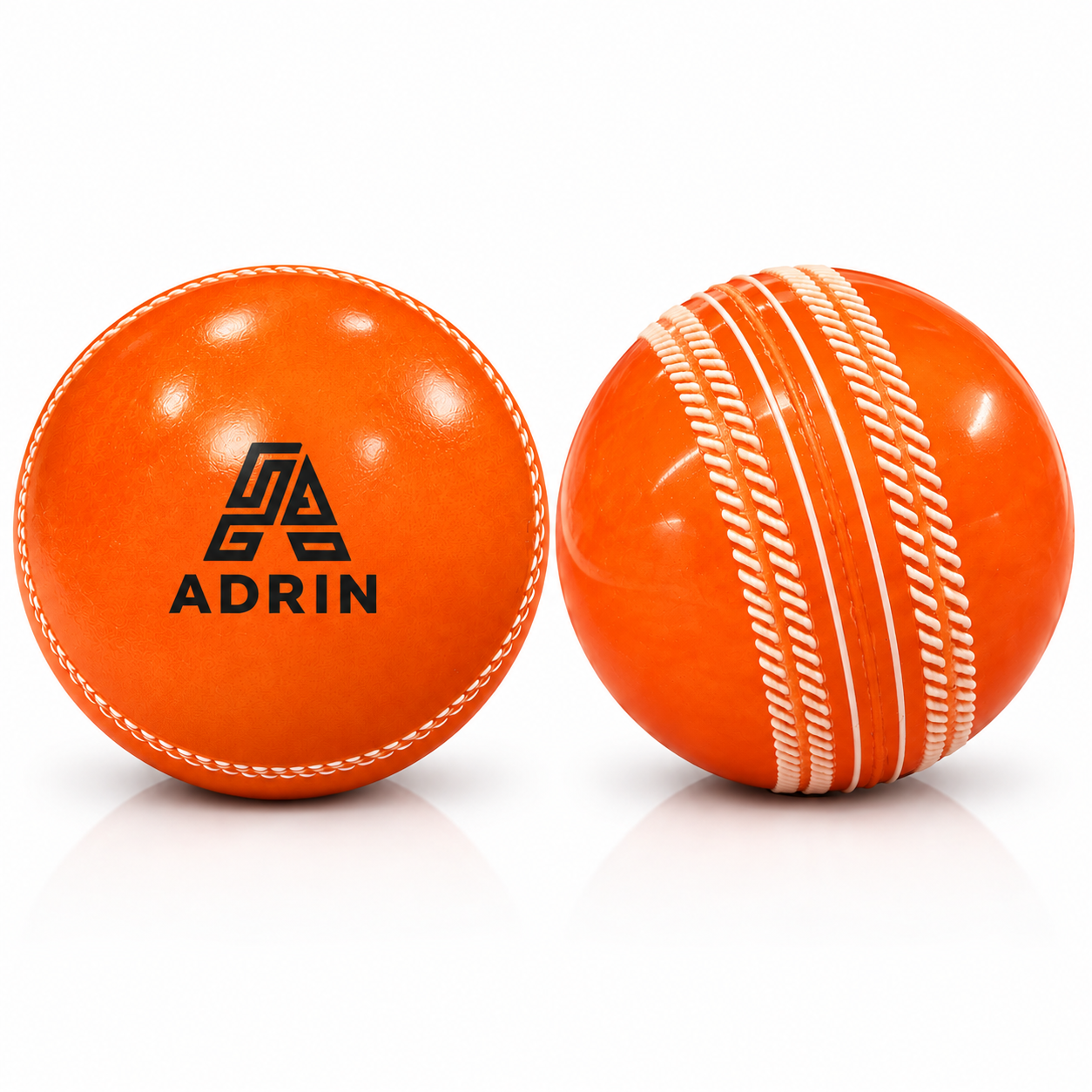
ADRIN I-20 120g Soft High Bounce Cricket Practice Ball 
ADRIN I-30 130g Soft High Bounce Cricket Practice Ball 
ADRIN Synthetic Cricket Ball 120g


Comments